Kris Ponto, Community Volunteer, SD Alzheimer’s Association and 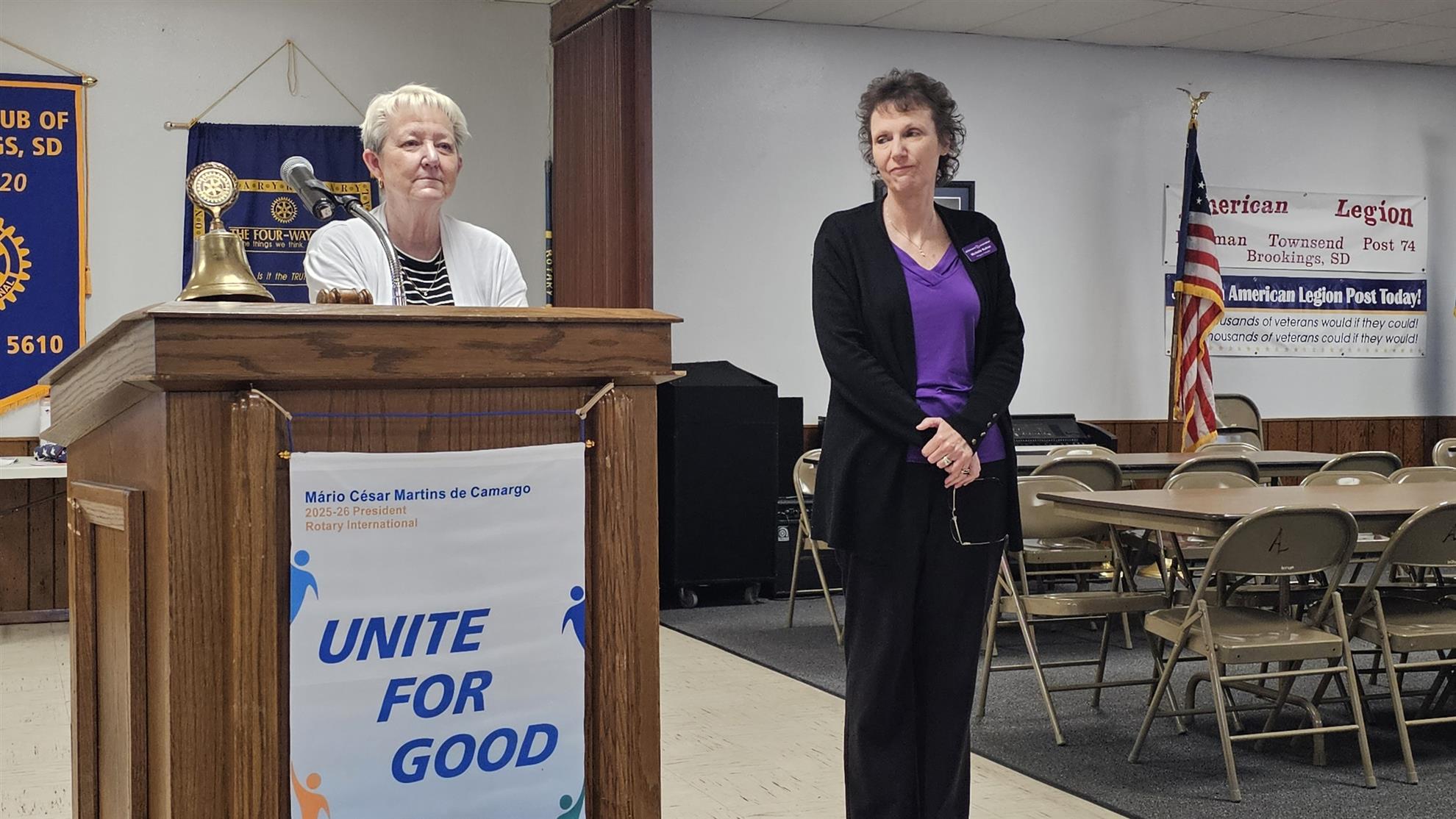 Michelle Kutner, State Program Director, SD Alzheimer’s Association
Michelle Kutner, State Program Director, SD Alzheimer’s AssociationMembers of the Brookings Rotary Club recently welcomed presenters from the South Dakota Alzheimer's Association for an educational program focused on Alzheimer’s disease, dementia awareness, caregiver support and ongoing research efforts.
Kris Ponto, a volunteer community educator with the Alzheimer’s Association and retired geriatric nurse, shared both professional and personal perspectives during the presentation.
“My mother and my grandmother both had Alzheimer’s, so it’s an area that I’m very passionate about,” Ponto said. “I just love to be able to educate people about the disease.”
During the presentation, attendees learned about the differences between Alzheimer’s disease and dementia, how Alzheimer’s affects the brain, known risk factors, stages of the disease and the latest developments in research and treatment.
Ponto emphasized that Alzheimer’s is not a normal part of aging.
“Alzheimer’s is a progressive and fatal disease,” she said. “It is a brain disease that causes memory loss and affects a person’s ability to remember, think, plan and ultimately function.”
The program also highlighted that Alzheimer’s disease is the most common form of dementia, accounting for an estimated 60–80% of dementia cases.
Speakers discussed risk factors associated with the disease, including age, family history and genetics. Ponto noted that age remains the greatest known risk factor.
“After age 65, the risk of developing Alzheimer’s doubles every five years,” she said. “For people age 85 and older, there is about a one-in-three chance of having the disease.”
The presentation also explored how Alzheimer’s progresses over time and included personal accounts from individuals living with early-stage Alzheimer’s disease, helping attendees better understand the emotional and cognitive challenges patients face.
Despite the challenges surrounding Alzheimer’s disease, speakers shared optimism about current research efforts and advances in early detection and prevention strategies.
Among the resources highlighted were the Alzheimer’s Association’s 24/7 Helpline at 800-272-3900 and the organization’s website, ALZ.org, which offers educational materials, support services and community resource information.
The Brookings Rotary program underscored the importance of education, awareness and continued research in the fight against Alzheimer’s disease while providing attendees with practical tools and support resources for families affected by dementia.
Michelle Kutner, state program director for the Alzheimer's Association in South Dakota, explained that diagnosing Alzheimer’s disease typically involves multiple evaluations rather than a single test. She encouraged individuals experiencing memory concerns to begin by consulting their primary care physician, who may then refer them to specialists such as neurologists or geriatricians for further assessment.
Kutner also highlighted recent advances in treatment options available in South Dakota, including newer medications that can slow the progression of the disease when diagnosed early.
“We’re really encouraging people to seek early detection,” Kutner said. “Some of the newer medications now available can actually slow disease progression, but individuals qualify for those treatments only in the early stages, such as mild cognitive impairment.”